Islamic terrorists killed at least 33 civilians and torched more than 50 houses during a brutal overnight attack in eastern Democratic Republic of Congo (DR Congo) on November 5. They also set fire to a health facility, forcing more than a hundred patients, including people with confirmed and suspected Ebola infections, to flee for their lives.
According to Congolese authorities, the Allied Democratic Forces (ADF), an Islamic jihadi organization with an established affiliation with ISIS, carried out this massacre in Cantine-Aloya, North Kivu province.
The terrorists launched their assault at around 11 p.m. local time in Cantine-Aloya, a village about 50 kilometers west of Beni. They opened fire on residents, burned houses, and attacked civilians with machetes. Local civil society leader Tchetche Aliamini told Reuters that authorities and community representatives had recovered 33 bodies. Most victims suffered gunshot wounds, while the attackers burned or hacked others to death. Justin Paluku, who heads a local civil society organization, separately reported that the jihadis burned more than 50 houses and looted property across the affected area.
The terrorists also set fire to a health post near the village and disrupted medical services at the Kelekele Hospital Center, forcing around 180 patients to flee the hospital, including one confirmed Ebola patient and several people with suspected infections. Medical director Christian Kakule has noted that the fleeing patients and high-risk contacts could spread the deadly virus if they lost access to medical supervision and isolation facilities. The attack therefore compounded an already severe public health emergency in North Kivu, which accounts for a significant share of the country’s Ebola infections. The Africa Centers for Disease Control and Prevention condemned the assault on November 8. They warned that attacks on health facilities, displacement, and interruptions to disease surveillance may further endanger vulnerable communities.
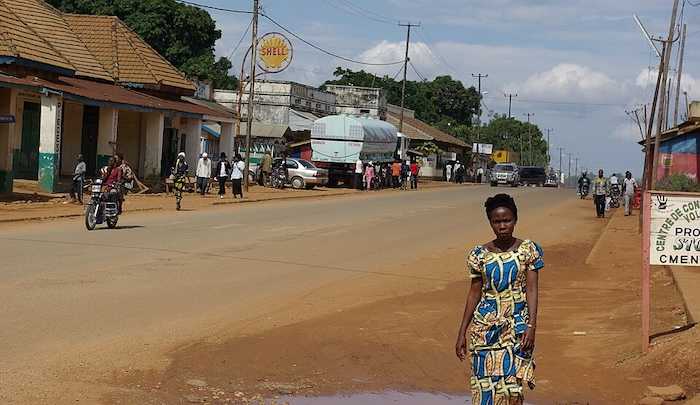
The ADF’s involvement spotlights the growing threat of Islamic jihad in Central Africa. The organization originated in Uganda in the 1990s. Initially, it emerged from an alliance between Islamic elements within Uganda’s Tabliq movement and remnants of the National Army for the Liberation of Uganda (NALU). The alliance took shape in 1995, after Ugandan security forces dismantled jihadi bases in western Uganda and forced the group to relocate across the border into what was then Zaire, now the Democratic Republic of the Congo. Though the jihadi group originally pursued an insurgency against Ugandan President Yoweri Museveni’s government, its leadership soon adopted an explicitly transnational jihadist ideology and its ambition extended beyond opposition to the Ugandan and Congolese governments.
Ugandan authorities arrested its founder, Jamil Mukulu, in Tanzania in 2015, after which his successor, Musa Baluku, steered the organization towards a closer relationship with the Islamic State (ISIS) and its global jihadist network. By around 2017, the group had pledged allegiance to ISIS; in turn, the terrorist group publicly recognized the ADF as an affiliate in 2018. ISIS subsequently began claiming responsibility for ADF attacks through its propaganda channels in 2019. The group now operates as the Congolese branch of the Islamic State Central Africa Province (ISCAP), while continuing to use its original name, and seeks to establish territorial control and impose Islamic rule. It has promoted this ideological project through propaganda, recruitment, and violence. The United States designated ISIS-DRC as a Foreign Terrorist Organization in March 2021.
The ADF has repeatedly used mass killings, kidnappings, arson, and attacks on civilian communities to sustain its insurgency. It targets defenseless populations, terrorizes residents, and threatens the government’s authority in areas where it operates. The group also exploits local economic networks and revenue sources, including mining and the mineral trade, to sustain its activities.
The organization’s record demonstrates the scale of its brutality. In July 2025, ADF jihadis killed 66 people in eastern Congo in an attack that the United Nations described as a bloodbath. Earlier attacks also targeted displacement camps, villages and religious gatherings. In 2021, the group expanded its terrorist operations into Uganda, where it carried out suicide bombings in Kampala that killed civilians and injured dozens. These attacks illustrated its willingness to extend its campaign beyond Congo and strike civilian targets across national borders.
The November 5 massacre marks another devastating episode in the ADF’s prolonged campaign of Islamic violence. The group’s documented ISIS affiliation, jihadi ideology, and history of attacks against civilians provide important context. Its continued violence demonstrates how Islamic jihad organizations exploit weak security structures, regional unrest, and vulnerable communities to maintain and expand their insurgencies.
Leave a Reply